
What is Sextortion?

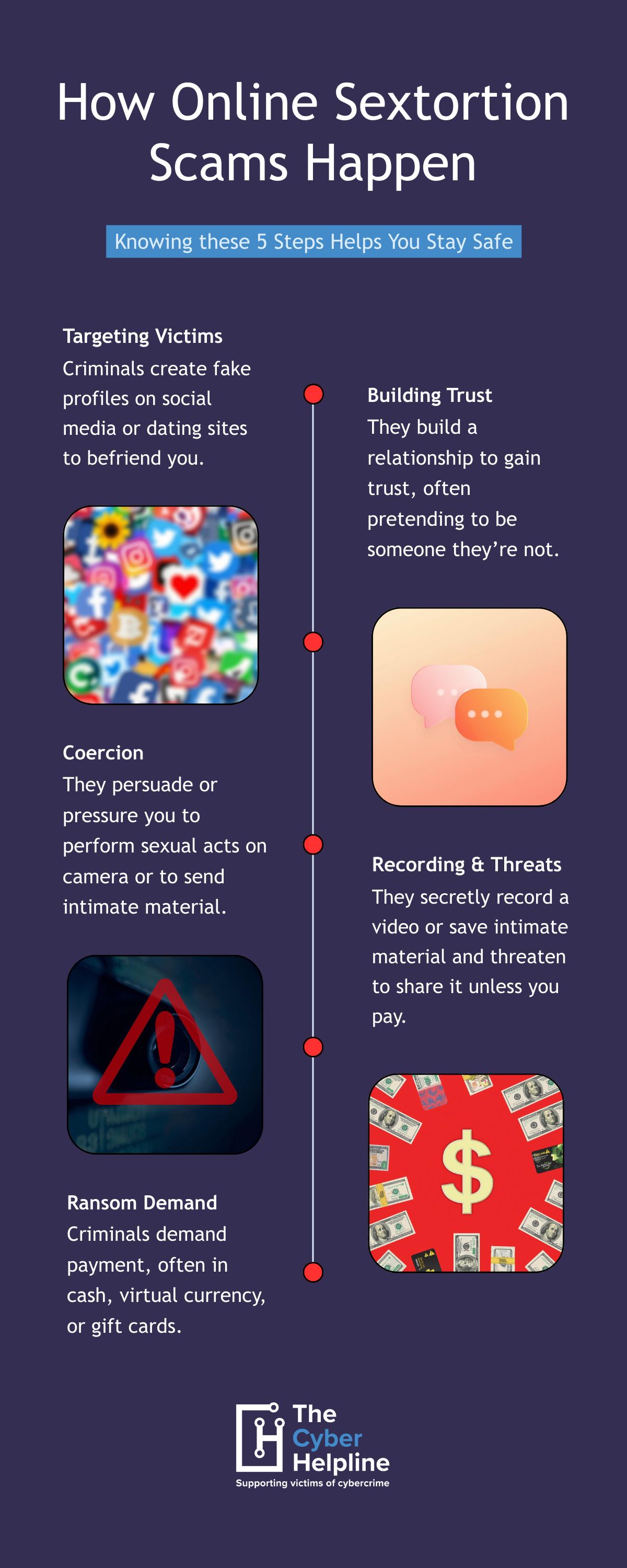
Extortion or blackmail using intimate images, commonly known as sextortion, occurs when criminals use fake identities to befriend victims online and persuade them to share sexually explicit images or videos, or to perform sexual acts on camera. Offenders then threaten to share the footage unless a ransom is paid.
Offenders target individuals of all genders and ages, typically focusing on vulnerability and ease of exploitation rather than financial means. Leverage may be financial, but more commonly involves threatening reputational harm, personal distress, or damage to relationships if material is disclosed.
Immediate Steps to Take if You Are a Victim of Sextortion
In line with the National Crime Agency recommendations, we recommend:
1. Report It
Contact your local police station—they will take your case seriously and act confidentially.
If under 18, report to CEOP.
Notify your internet service provider—they can preserve any evidence from the communications or platform used by the criminal.
2. Cut Communications
Do not engage further with the criminals.
3. Do Not Pay
Paying often leads to further demands. Even if a payment is made, offenders may still post the content. If you have already paid, check to see if the money has been collected. If it has, and if you are able, then make a note of where it was collected from. If it hasn't, then you can cancel the payment - and the sooner you do that, the better.
4. Preserve Evidence
Take screenshots of all communications with the offender, including messages, emails, chat logs, or posts.
Record all relevant details, such as:
Username, user ID, or profile link
Platform used (e.g., Skype, WhatsApp, Zoom, social media)
Payment details (Western Union, MoneyGram MTCN, cryptocurrency, gift cards, etc.)
Any photos, videos, or files sent or received
Important: Some platforms display a username that is different from the user ID. Law enforcement often needs the user ID or unique identifier, not just the displayed name. Look for the numeric ID, profile link, or account handle depending on the platform.
Do not delete any messages, videos, or emails, even if they are distressing. Keep a backup in a secure location offline if possible. If the platform allows, export chat logs or download messages as a file. This ensures you have the complete conversation in a format that police can use.
5. Work With Platforms to Block Content
If you have a copy of the content, you may be able to block it being shared on some platforms by working with them in advance. For example, stopNCII.org may be able to help prevent images being shared on their partner platforms which include Facebook, TikTok and OnlyFans.
We want to better understand the impact of sextortion. Share your experience using our online form to help us protect future victims.
Share Your StoryApproaches to Managing Sextortion
1. Report and Work With the Police
Organised gangs are often behind sextortion. Police have tested procedures for handling these crimes.
2. Limit Criminal Access Online
Suspend (do not delete) Facebook or other social accounts to preserve evidence.
Monitor any other accounts which you might have linked in case the criminals try to contact you via one of those.
3. Get Videos Taken Down
Use online reporting processes on websites to remove content. The platforms can take it down and set up an alert in case the video resurfaces.
4. Consider Warning Friends and Family Against Viewing Content
Criminals may threaten to share explicit videos with your friends and family to pressure you into paying. You can consider sending a brief, neutral warning to those close to you—such as, “My account may have been hacked. Please do not click on any suspicious links or content that mentions me”—to protect them without revealing sensitive details.
Avoid sharing any videos or messages from the offender
Follow police or specialist guidance to ensure you do not compromise evidence while keeping your network safe.
5. Provide Support to Victims
If the victim is a child, partner, or friend, stay calm and provide reassurance. Avoid watching the content or reading comments. If you are the victim, seek support from someone close or from specialist organisations.
6. Avoid Paying Ransom
Strongly discouraged. Paying increases the risk of repeated demands.
If paid, document all payment details.
If you have been asked for more money or to do more in front of a camera, then contact the police immediately.
Need more one-on-one support? Chat with our chatbot and, if you are eligible, request direct support from our cyber experts through our Helpline.
Get Confidential Help NowTips to Prevent Sextortion in the Future
1. Trust Your Instincts
If something feels wrong or too good to be true, end the conversation immediately.
2. Avoid Risky Situations
Never perform sexual acts on webcam, digital camera, or smartphone if there is a chance the content could be recorded or shared.
3. Be Careful Who You Connect With Online
Avoid friend requests from strangers.
Use a separate email for dating sites and avoid revealing personal details such as your full name.
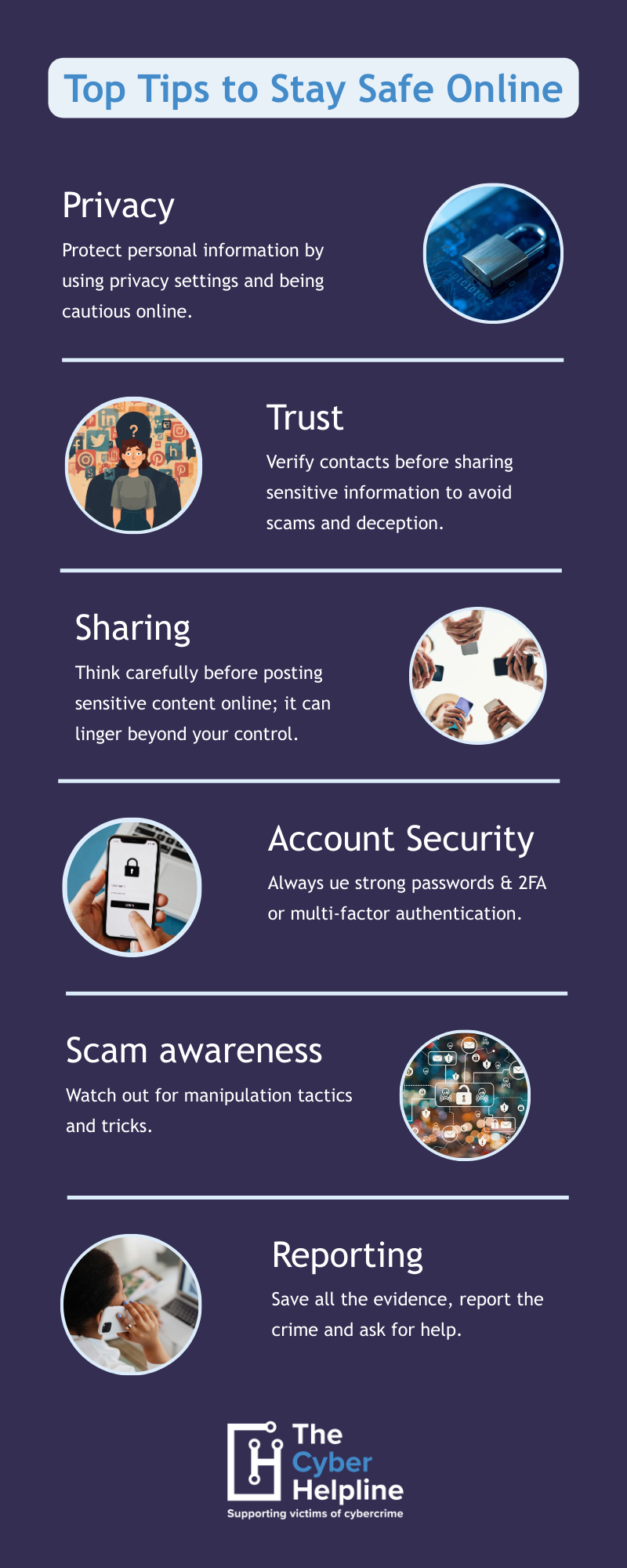
4. Protect Your Privacy
Share minimal personal information online.
Review your social media profiles and remove anything that can be used against you.
Review your social media privacy settings and strengthen account security.
About The Cyber Helpline
The Cyber Helpline is a non-profit organisation led by expert cybersecurity volunteers, dedicated to supporting victims of cybercrime, digital fraud, and online harm.
We provide a free 24/7 self-help service and a confidential helpline for individuals and sole traders. We help victims understand, contain, recover and learn from cyber attacks by linking them with cybersecurity technology & experts who provide relevant advice and guidance.
Helping Victims of Cybercrime
As a non-profit organisation, we rely on donations to provide free, confidential support to victims and survivors.
Your support helps us:
Keep our service completely free for all victims
Provide confidential guidance and step-by-step advice from cybersecurity experts
Support vulnerable individuals, including children and at-risk adults
Maintain resources, guides, and tools to prevent online abuse
Help us protect victims of cybercrime by donating below.
Frequently Asked Questions (FAQs)
- Preserving evidence
- Reporting to police and online platforms
- Preventing further harassment or content sharing
- Guidance on next steps
- Do not share any explicit, intimate, or personal content via webcam, smartphone, messaging apps, social media, online chats, or other digital platforms that could be recorded or misused. This includes sexual acts, nudity, intimate photos or videos, private messages, or any personal information you wouldn't want publicly exposed.
- Be cautious with strangers on social media or dating sites.
- Keep personal information private.
- Use strong security for your online accounts.
We rely on donations to help victims recover from cyber attacks.